

Key Takeaways
- California healthcare employers face unique insurance requirements including professional liability, regulatory compliance coverage and higher workers’ compensation rates due to workplace injury risks.
- Medical malpractice insurance is essential for any practice, clinic or facility, with California’s MICRA cap on non-economic damages set at $350,000 for non-hospital settings (increasing annually through 2033).
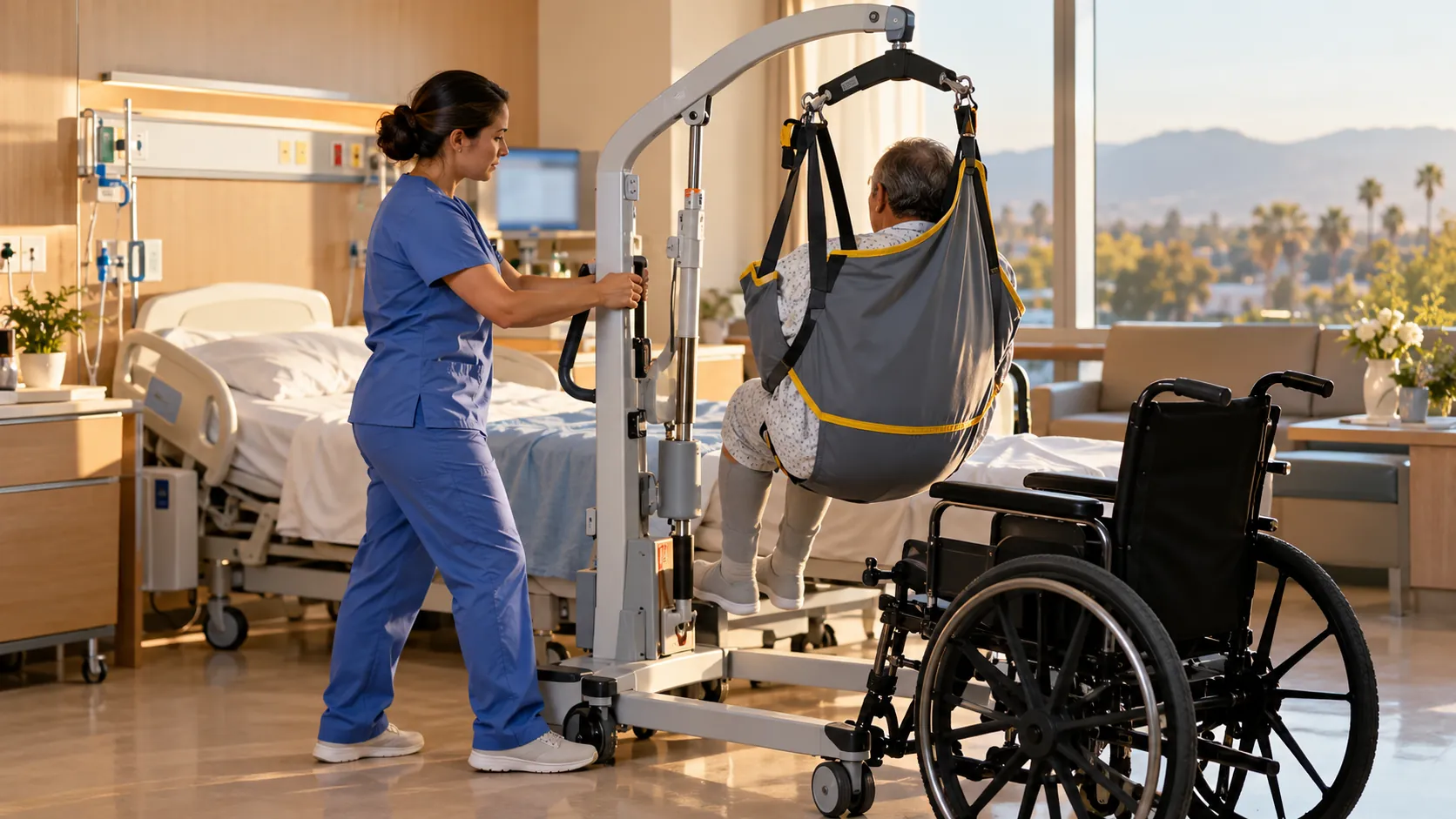
- Workers’ comp class codes for healthcare workers carry higher rates than typical office jobs because of exposure to needlestick injuries, patient handling, infectious disease and workplace violence.
- A comprehensive insurance program for a healthcare employer typically includes general liability, professional liability, workers’ comp, commercial property, cyber liability and employment practices coverage.
What This Guide Covers
- Why Healthcare Employers Need Specialized Insurance
- Required Coverage for California Healthcare Employers
- Professional Liability and Malpractice Insurance
- Workers’ Compensation for Healthcare Staff
- Cyber Liability and HIPAA Compliance
- Employment Practices Liability
- What Drives Insurance Costs for Healthcare Employers
- How to Build the Right Coverage Program
- Frequently Asked Questions
Why Healthcare Employers Need Specialized Insurance
Healthcare businesses operate in a regulatory and liability environment that standard business insurance policies were not designed to address. A dental practice, urgent care clinic, home health agency or outpatient surgery center faces risks that a retail store or consulting firm does not: clinical errors that harm patients, HIPAA-regulated data that hackers target, staff injuries from lifting patients or handling sharps, and employment claims in a high-turnover industry.
Standard commercial general liability and business owner’s policies exclude professional services. That means a claim alleging misdiagnosis, improper treatment or medication error would not be covered by a typical general liability policy. Healthcare employers need a layered insurance program where each policy addresses a specific category of risk.
California adds another layer. The state has its own medical malpractice damage caps under MICRA, its own nurse-to-patient staffing ratios, Cal/OSHA healthcare workplace safety standards and a Confidentiality of Medical Information Act (CMIA) that goes beyond federal HIPAA requirements. Your insurance program needs to account for all of this.
Required Coverage for California Healthcare Employers
Some coverages are legally required. Others are not mandated by law but are effectively required by contracts, credentialing bodies or the realities of operating in the healthcare space.
| Coverage Type | Legally Required? | Practically Required? | Why |
|---|---|---|---|
| Workers’ compensation | Yes (if you have employees) | Yes | California law. No exceptions for healthcare employers. |
| Professional liability / malpractice | Not by state law for most employers | Yes | Required by credentialing, hospital affiliations, payer contracts and leases. |
| General liability | No | Yes | Covers slip-and-fall, property damage, non-professional bodily injury claims. |
| Commercial property | No (unless required by lease/lender) | Yes | Protects medical equipment, furnishings and tenant improvements. |
| Cyber liability | No | Yes | HIPAA breach notification costs, forensics, legal defense, regulatory fines. |
| Commercial auto | Yes (if business-owned vehicles) | Depends | Home health agencies, mobile clinics and delivery services need this. |
| Employment practices liability | No | Strongly recommended | Healthcare has high turnover and frequent employment-related claims. |
Professional Liability and Malpractice Insurance
Professional liability insurance (also called malpractice insurance or errors and omissions insurance in some contexts) covers claims arising from the professional services your practice or facility provides. This includes allegations of misdiagnosis, surgical errors, medication mistakes, failure to obtain informed consent and delayed treatment.
In California, the Medical Injury Compensation Reform Act (MICRA) was updated by Assembly Bill 35 in 2022. The revised law set non-economic damage caps at $350,000 for cases not involving a hospital setting and $750,000 for wrongful death cases, with these caps increasing by $40,000 per year for non-hospital cases and $50,000 per year for wrongful death cases through 2033. After 2033, the caps adjust for inflation at 2% per year.
There are two main policy structures to understand.
Occurrence-based policies cover incidents that occur during the policy period, regardless of when the claim is filed. If a patient treated in 2026 files a claim in 2028, the 2026 policy responds even if you have since switched carriers.
Claims-made policies cover claims that are both made and reported during the policy period. If you cancel or switch a claims-made policy, you need to purchase an extended reporting period (commonly called a “tail”) to cover claims filed after the policy ends for incidents that occurred while the policy was active. Tail coverage can cost 150% to 250% of the final year’s annual premium.
Workers’ Compensation for Healthcare Staff
Healthcare workers face injury rates significantly higher than most industries. According to the Bureau of Labor Statistics, healthcare and social assistance workers experience injury and illness rates nearly three times the national average. The most common causes are patient handling and movement, slips and falls, needlestick and sharps injuries, workplace violence (particularly in emergency and behavioral health settings) and repetitive motion injuries.
California’s workers’ compensation system classifies healthcare employees under specific class codes that reflect these elevated risks. Here are some common codes and their approximate rate ranges.
| Class Code | Description | Approx. Rate per $100 Payroll |
|---|---|---|
| 8832 | Physicians and clerical staff | $0.60 – $1.20 |
| 8833 | Hospitals, professional staff | $1.50 – $3.00 |
| 8835 | Home health care | $3.50 – $6.50 |
| 8829 | Convalescent/skilled nursing facilities | $4.00 – $7.00 |
| 8834 | Outpatient clinics | $1.00 – $2.50 |
Home health aides and skilled nursing facility workers carry some of the highest workers’ comp rates in any industry because of the physical demands of patient care and the frequency of injuries. A home health agency with $500,000 in annual payroll could easily pay $17,500 to $32,500 per year in workers’ comp premiums.
Reducing your experience modification rate (EMR) is one of the most effective ways to lower these costs. Invest in proper patient-handling equipment, enforce sharps disposal protocols and implement a workplace violence prevention plan as required by California’s SB 1299.

Cyber Liability and HIPAA Compliance
Healthcare organizations are the most targeted industry for data breaches, and the cost per breached record in healthcare consistently exceeds every other sector. A cyber liability policy for a healthcare employer covers breach notification costs (required under both HIPAA and California’s CMIA), forensic investigation to determine what was compromised, credit monitoring for affected patients, legal defense costs, regulatory fines and penalties, and business interruption losses if a ransomware attack takes down your systems.
HIPAA violations can result in penalties ranging from $141 to $2,134,831 per violation depending on the level of negligence, with an annual cap of $2,134,831 per identical provision. California’s CMIA provides a private right of action for patients, adding another layer of exposure beyond federal penalties.
When shopping for cyber liability coverage, look for a policy that explicitly covers regulatory proceedings (not all do), social engineering and funds transfer fraud, system failure (not just breaches from external attacks), and business interruption with a reasonable waiting period (12 to 24 hours, not 72).
Employment Practices Liability
Healthcare has one of the highest employee turnover rates of any industry. High turnover combined with shift work, physical demands and emotionally charged environments creates fertile ground for employment claims: wrongful termination, harassment, discrimination, retaliation and wage-and-hour disputes.
California’s employment laws are among the strictest in the country. The Fair Employment and Housing Act (FEHA) provides broader protections than federal law, and the Private Attorneys General Act (PAGA) allows employees to file representative lawsuits for Labor Code violations. An employment practices liability insurance (EPLI) policy covers defense costs and settlements for these types of claims.
For a healthcare employer with 25 to 100 employees, EPLI premiums typically run $2,000 to $8,000 per year. Considering that defending a single PAGA claim can cost $50,000 to $200,000 or more, the coverage pays for itself quickly.
What Drives Insurance Costs for Healthcare Employers
Several factors determine what you will pay for a comprehensive insurance program.
Specialty and services provided. A dermatology practice faces lower malpractice risk than an OB-GYN or surgical center. The types of procedures and treatments you perform directly affect your professional liability premium.
Number of providers and staff. More providers means more exposure. Premiums scale with the number of physicians, nurse practitioners, physician assistants and other clinical staff.
Claims history. A practice with prior malpractice claims or workers’ comp losses will pay more than one with a clean record. Your loss history follows you, and carriers look at five or more years of data.
Revenue and payroll. General liability and workers’ comp premiums are based on revenue and payroll respectively. Higher numbers mean higher premiums.
Location within California. Urban areas with higher litigation rates, particularly Los Angeles and San Francisco, tend to carry higher premiums than rural or suburban areas for both malpractice and general liability.
How to Build the Right Coverage Program
Start with the requirements. Review your lease, payer contracts, hospital affiliation agreements and credentialing applications. These documents often specify minimum coverage types and limits. Build your program to meet or exceed these contractual requirements first.
Layer your coverage. Rather than buying the highest limit on each individual policy, consider an umbrella or excess liability policy that sits on top of your general liability, auto and professional liability. This gives you higher total limits at a lower cost than increasing each underlying policy.
Bundle where it makes sense. Some carriers offer healthcare-specific Business Owner’s Policies (BOPs) that combine general liability, property and sometimes professional liability into a single policy at a lower total premium than buying each separately.
Review annually, not just at renewal. If you add a new location, hire additional providers, start offering new services or purchase expensive equipment, update your coverage mid-term rather than waiting for renewal. A gap discovered after a loss is an expensive lesson.
Work with a broker who knows healthcare. Healthcare insurance is a specialty. A broker with experience in medical practices, clinics and healthcare facilities understands the coverage nuances, knows which carriers write healthcare risks competitively in California and can spot gaps that a generalist might miss.
Frequently Asked Questions
Does my practice need its own malpractice insurance if my physicians carry individual policies?
Yes. Individual physician policies cover the physician personally but may not cover the practice entity, other staff members or vicarious liability claims against the practice. An entity-level professional liability policy covers the practice as a whole and should be carried in addition to individual provider policies.
Are locum tenens and temporary staff covered under my practice’s insurance?
Not automatically. Locum tenens providers may carry their own malpractice coverage through their staffing agency. Verify this before they start working. If they do not have their own coverage, your policy may need to be endorsed to include them, which could affect your premium.
Do I need separate cyber insurance if I already have a business owner’s policy?
Almost certainly yes. Most BOPs include minimal or no cyber coverage. The cyber endorsements available on standard BOPs typically have low limits ($25,000 to $100,000) and narrow coverage that does not address HIPAA regulatory proceedings, social engineering fraud or adequate breach notification costs for a healthcare organization.
What insurance do I need to open a new medical practice in California?
At minimum you need workers’ compensation (if hiring employees), professional liability/malpractice insurance, general liability insurance and commercial property coverage (usually required by your lease). Your landlord, hospital affiliations and payer contracts will specify minimum limits. Cyber liability and EPLI should be added as soon as practical, ideally before you see your first patient.
How can I reduce my workers’ comp costs as a healthcare employer?
Focus on injury prevention: invest in mechanical patient lifts and transfer equipment, enforce sharps disposal protocols, train staff in de-escalation techniques and implement a workplace violence prevention plan. Report claims promptly, offer modified duty to injured workers and work with your carrier on a return-to-work program. Over time these efforts lower your experience modification rate and reduce your premium.
Does my home health agency need commercial auto insurance?
If your agency owns or leases vehicles for staff to use when visiting patients, yes. If employees use their personal vehicles, you should carry hired and non-owned auto liability coverage on your commercial auto policy to protect the agency when staff are driving for work purposes. Verify that employees maintain adequate personal auto insurance as well.
Insurance Built for California Healthcare Employers
Dream Safe compares coverage options from carriers who specialize in healthcare risks, so your practice, clinic or facility is protected from every angle.