Coverage for your building, tools, equipment and inventory, at your shop and on the job site.
Commercial property coverage protects buildings and the contents inside them. Contractors also need coverage for tools and equipment that move from job to job, usually called inland marine or contractor’s equipment coverage.
We’ll help you list what you own and choose limits that make sense.
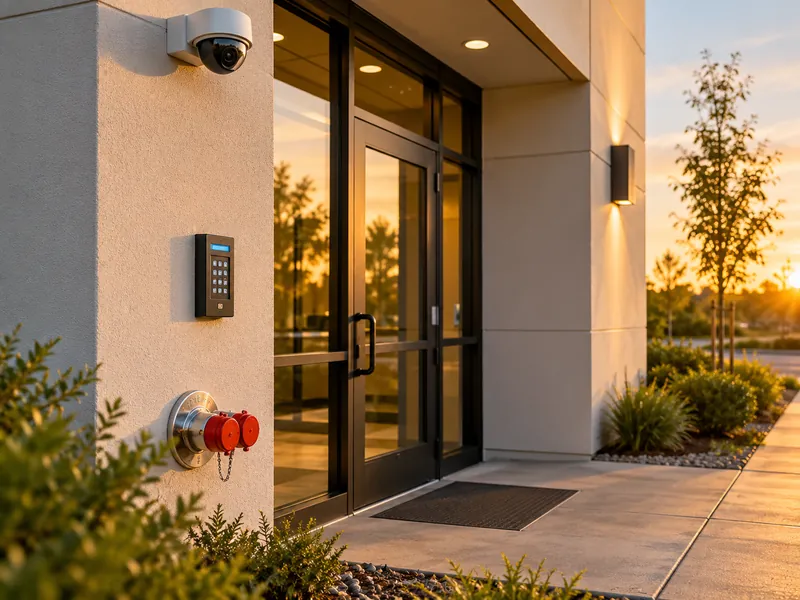
The building you own, including permanent fixtures.
Furniture, supplies, stock and materials.
Contractor’s equipment coverage for tools on job sites and in transit.
Lost income while you recover from a covered loss.
What it would cost to replace your property.
Where the property is kept and local risks.
Security, fire protection and how equipment is stored.
How much you choose to pay before coverage applies.
How your property is valued decides how much a claim pays. The California Department of Insurance explains the two main options:
Replacement cost usually costs more but leaves fewer surprises. Some policies only pay full replacement cost once you actually repair or replace the property. Read the valuation section of your commercial property insurance in California before a loss, not after.
Many commercial property policies include a coinsurance clause. The state’s business insurance guide notes that most business policies require property to be insured for at least 80 percent of its value.
If you insure for less than the required percentage, the carrier can reduce what it pays on a claim in proportion to how underinsured you were, even on a partial loss. In simple terms, if you carried only half the limit you were required to carry, you might collect about half of the covered loss, minus your deductible.
Commercial property insurance in California is usually built around a fixed location. Tools and equipment that move between your shop, your truck and job sites usually need inland marine coverage, often called contractor’s equipment or a tool floater.
Common ways to schedule it:
Check whether theft from an unattended vehicle or an unlocked job site is covered. Many policies have conditions about locked storage. Trades like landscaping and tree service often have significant equipment values to schedule.
A fire or storm can close your shop even if the building is insured. Business income coverage pays lost net income and continuing expenses, such as payroll and rent, while you recover from a covered loss. Extra expense pays reasonable added costs to keep operating, such as renting temporary space or equipment.
Look at the waiting period before coverage starts, how long it pays and whether it covers losses at locations you depend on, such as a key supplier. Estimate how long it would really take you to reopen.
On commercial property insurance in California, limits should reflect what it would cost to replace your property today, not what you paid or what it’s listed for on your books. A practical way to build your numbers:
Keep the list somewhere other than your building, such as in cloud storage. Update it every renewal.
Most property policies have a flat deductible per loss. Some also have a separate deductible for wind and hail, which may be a percentage of the insured value rather than a set dollar amount. On a larger building, that can mean a much bigger out-of-pocket cost than you expect.
California businesses face earthquake, wildfire and flood risk in many areas. Before you renew, check how your policy handles wind and hail, and whether a higher deductible actually saves enough premium to be worth it.
Some businesses hold other people’s property: a repair shop with customers’ equipment, a contractor with materials the owner bought or a business storing goods for others. A standard property policy may cover this only in a limited way, if at all.
Coverage for customers’ property, sometimes called bailee coverage, and installation or builder’s risk coverage for materials on a job can close that gap. Tell us whose property you handle and where it’s kept.
When you’re ready, request a quote with a list of what you own and where it’s kept. We’ll compare options and explain the valuation and coinsurance terms in each one.
Send us the requirements from your contract, lease or credentialing packet, including the certificate holder, additional insured and waiver of subrogation, so we can review your request.
Not by a standard property policy. Tools and equipment that move between job sites need inland marine or contractor’s equipment coverage.
Often only in a limited way. Homeowners policies usually have low limits for business property. We can review what you have.
Usually yes, for your contents, equipment and improvements. Your lease may also require liability coverage.
It’s a reduction in a claim payment when you insure property for less than the percentage of its value your policy requires. It can apply even to partial losses. Updating values each year helps avoid it.
Usually not. Property insurance is typically based on what it costs to rebuild, which can be very different from what the building would sell for. Land isn’t included in rebuilding cost.
Often not automatically. Rented equipment usually needs inland marine coverage for rented or leased equipment, and many rental agreements require proof of it.
It’s an option on some policies that suspends the coinsurance clause for the policy term when you submit a signed statement of values the carrier accepts. It’s worth asking about if your values are hard to pin down.
Only in certain situations. Many policies require direct physical damage from a covered cause, and off-premises utility interruption usually needs a specific endorsement.
Tell us what you own and where it’s kept. We’ll compare options from multiple carriers.
Tell us a little about your business. A licensed broker will follow up.