
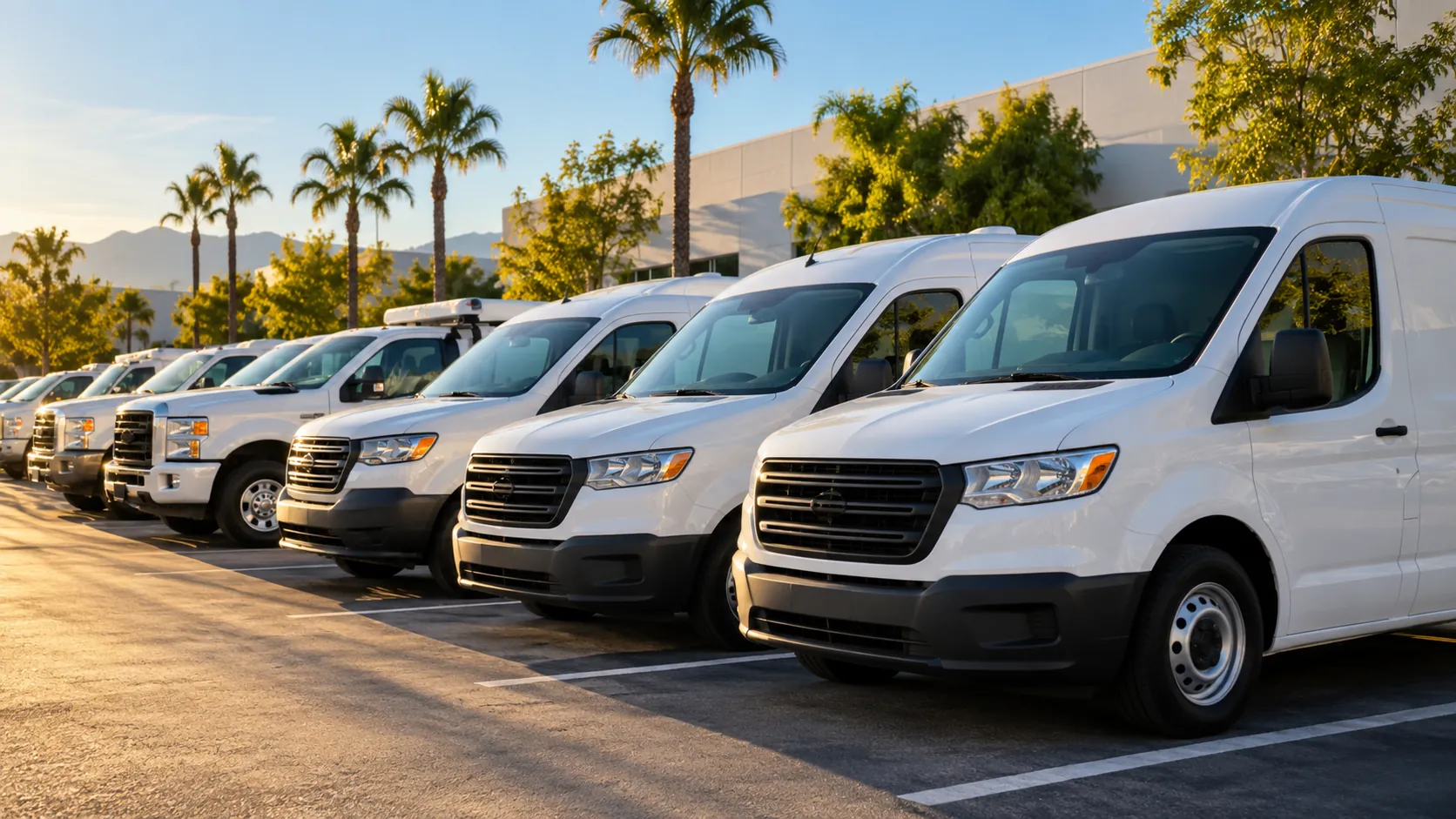
If your California business uses vehicles for any work purpose, you need commercial auto insurance. Your personal auto policy will not cover accidents that happen while driving for business, and California law requires liability coverage on every vehicle used commercially. The average cost for California small businesses is about $154 per month, but premiums vary widely based on your vehicles, drivers, and how you use them.
This guide covers what commercial auto insurance includes, California’s minimum requirements, and how to structure a policy that protects your business without overpaying.
Key Takeaways
- California requires a minimum of $30,000/$60,000/$15,000 in liability coverage on every commercially used vehicle.
- The average cost is about $154/month for small businesses, but fleets and high-risk industries pay more.
- Personal auto policies typically exclude business use. If you or your employees drive for work, you need a commercial policy.
- Hired and non-owned auto (HNOA) coverage fills the gap when employees use personal or rented vehicles for business tasks.
- Your general liability policy does not cover auto accidents. Commercial auto is a separate, required policy.
Contents
California Commercial Auto Insurance Requirements
California requires every business that operates vehicles to carry at least the state minimum liability coverage. The California DMV sets these minimums:
| Coverage | Minimum Limit | What It Pays For |
|---|---|---|
| Bodily injury per person | $30,000 | Medical expenses and damages for one person injured in an accident you cause |
| Bodily injury per accident | $60,000 | Total medical expenses and damages when multiple people are injured |
| Property damage per accident | $15,000 | Repair or replacement of property you damage in an accident |
Additional requirements apply to specific vehicle types. Semi-trucks, for-hire vehicles, and vehicles carrying hazardous materials must meet federal FMCSA insurance requirements, which are significantly higher than state minimums.
Penalties for operating a commercial vehicle without insurance in California include fines starting above $350 for a first offense and up to $1,800 for a repeat offense, potential vehicle impoundment, and a license suspension of up to four years.
Types of Commercial Auto Coverage
A commercial auto policy is modular. Liability is the required base, and you add coverages based on your vehicles, drivers, and risk tolerance.
| Coverage | What It Covers | When You Need It |
|---|---|---|
| Liability | Bodily injury and property damage you cause to others | Required by California law on every commercial vehicle |
| Collision | Damage to your own vehicle from an accident, regardless of fault | Whenever you own vehicles worth repairing or replacing |
| Comprehensive | Non-collision damage: theft, vandalism, fire, flood, falling objects, animal strikes | When your vehicles are at risk from events beyond driving |
| Uninsured/underinsured motorist | Your injuries and vehicle damage when the at-fault driver cannot pay | Highly recommended in California, where uninsured driver rates are significant |
| Medical payments (MedPay) | Medical expenses for you and your passengers, regardless of fault | When you carry passengers or employees in business vehicles |
| Hired and non-owned auto | Liability for accidents in rented, leased, or employee-owned vehicles used for business | When employees use personal cars for work errands or when you rent vehicles |
| Towing and labor | Roadside assistance and towing costs | Helpful for businesses that rely on vehicles to reach job sites or make deliveries |
How Much Commercial Auto Costs in California
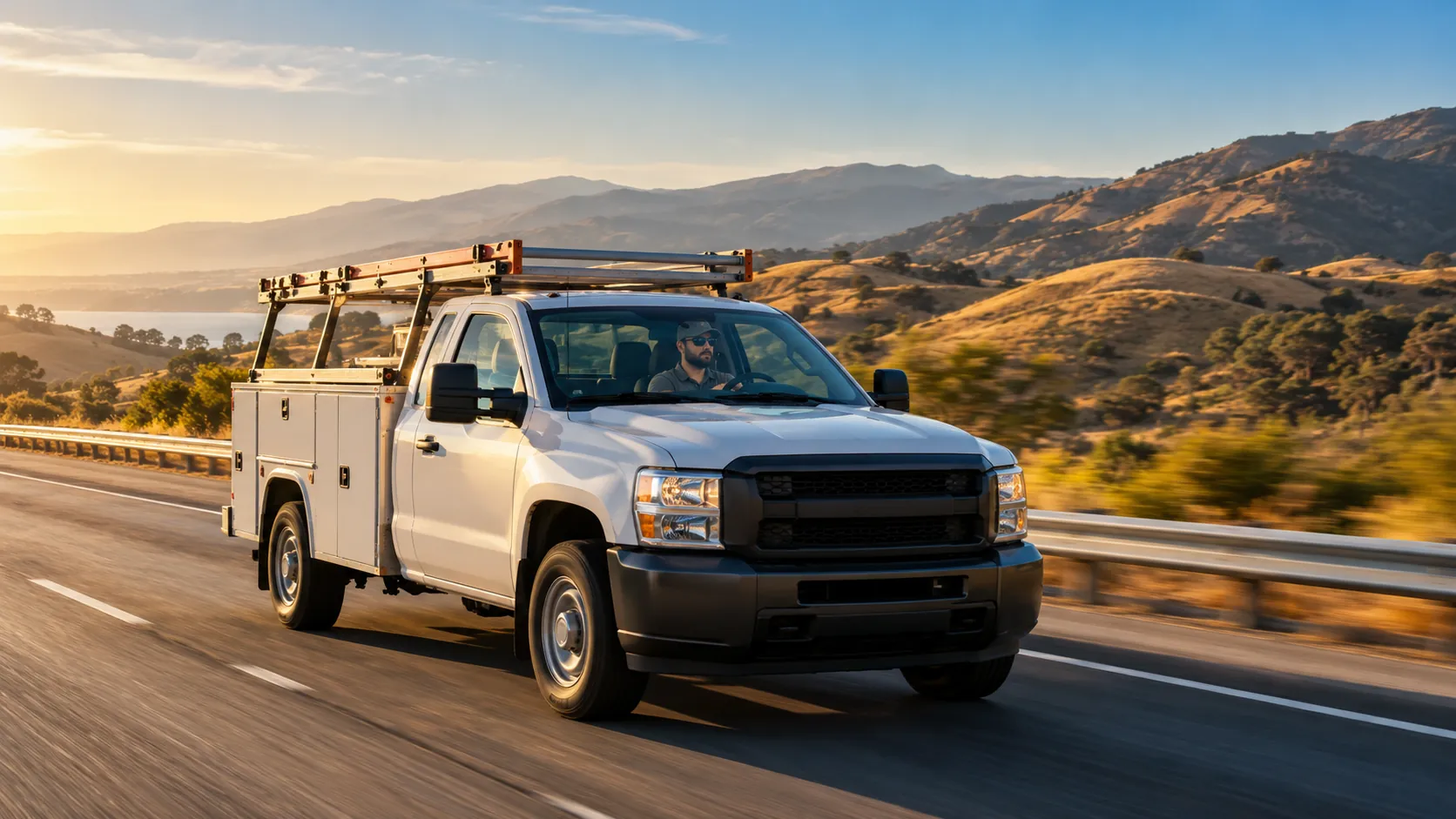
The average California small business pays about $154 per month ($1,843 per year) for commercial auto insurance, according to Insureon customer data. That figure is based mostly on businesses with fewer than five vehicles.
Your actual premium depends on several factors:
| Factor | How It Affects Your Premium |
|---|---|
| Number of vehicles | More vehicles mean more exposure and higher total premium, though per-vehicle costs may drop with fleet discounts |
| Vehicle type and value | Heavy trucks, specialty equipment, and newer high-value vehicles cost more to insure than older sedans or vans |
| Driver records | Employees with clean MVRs keep premiums low. Drivers with accidents, DUIs, or moving violations increase costs significantly |
| Annual mileage and radius | Vehicles driven long distances or across multiple states cost more than local-only use |
| Industry | Delivery services, trucking, and construction pay more than office-based businesses |
| Claims history | Past accidents and claims signal higher risk to the carrier |
| Coverage limits and deductibles | Higher limits raise premiums; higher deductibles lower them |
Who Needs Commercial Auto Insurance
If any of these describe your business, you need a commercial auto policy:
- You own vehicles titled to your business (vans, trucks, cars, trailers)
- Employees drive company-owned vehicles to job sites, client meetings, or for deliveries
- You lease vehicles for business use
- Employees use their personal vehicles for work tasks (you need at least HNOA coverage)
- Your business rents vehicles for projects or travel
- You operate vehicles that require a USDOT number or commercial driver’s license
Personal Auto vs. Commercial Auto
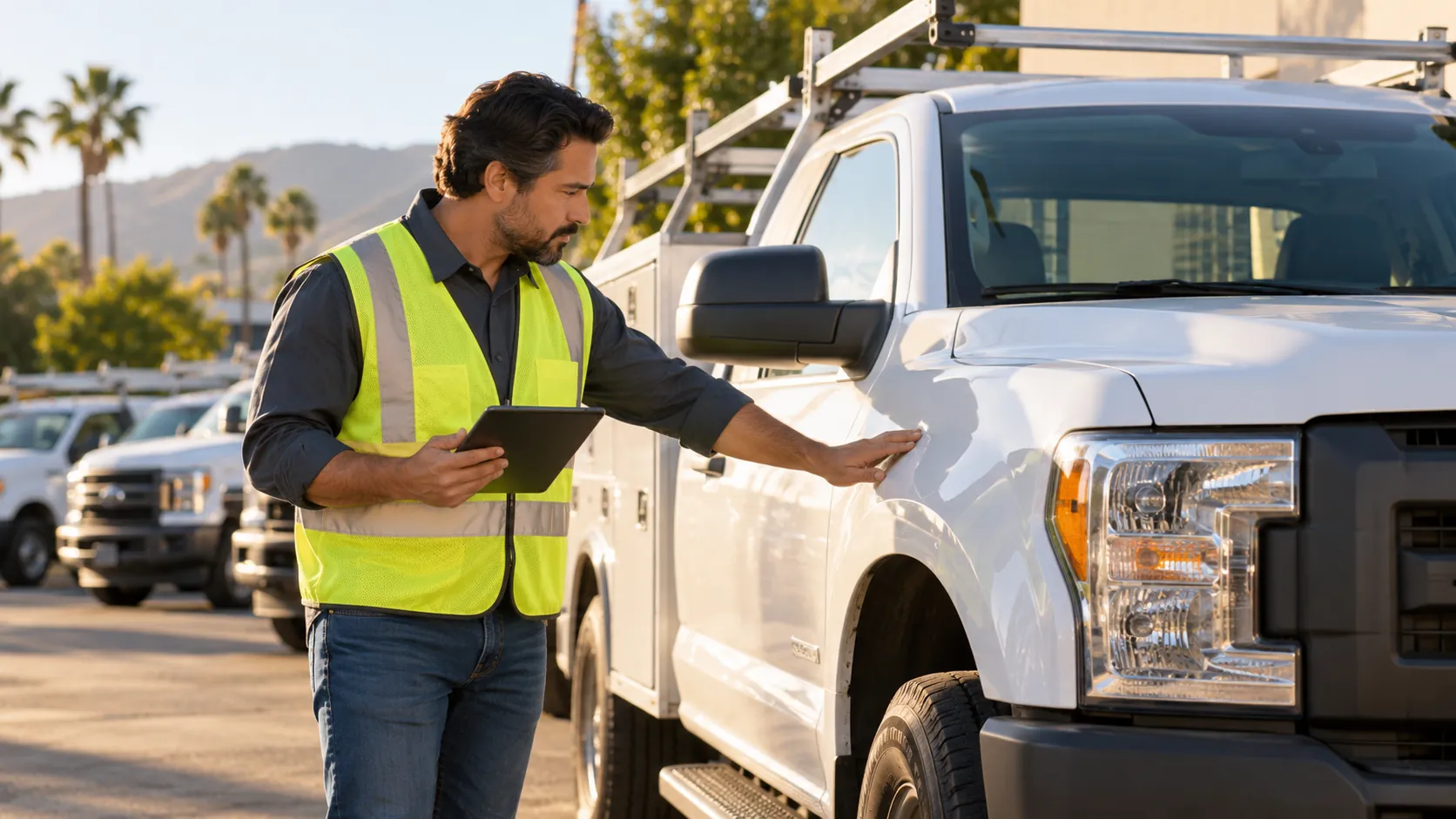
A common mistake is assuming your personal auto policy covers you when you drive for work. In most cases, it does not.
| Personal Auto | Commercial Auto | |
|---|---|---|
| Named insured | Individual | Business entity |
| Covers business use | Limited or excluded | Yes, built for it |
| Multiple drivers | Named household members | All authorized employees |
| Vehicle types | Personal cars and light trucks | Any vehicle including heavy trucks, vans, trailers, specialty equipment |
| Liability limits | Typically up to $500K | $1M+ available, often required by contracts |
| Loading/unloading | Not covered | Covered (optional endorsement) |
If you’re in an accident while driving to a client’s office, picking up supplies, or making a delivery, and your personal policy excludes business use, the claim will be denied. You would be personally responsible for all damages and injuries.
Hired and Non-Owned Auto Coverage
Hired and non-owned auto (HNOA) coverage is one of the most overlooked pieces of a business insurance program. It provides liability coverage when your business is responsible for an accident involving a vehicle you don’t own.
Hired auto covers vehicles your business rents or leases on a short-term basis. Non-owned auto covers employee-owned vehicles used for business purposes, such as driving to a client meeting, picking up supplies, or running a work errand.
HNOA does not cover physical damage to the vehicle itself. If an employee wrecks their own car while on a work errand, HNOA pays the third-party liability, but the employee’s personal collision coverage (or lack of it) handles their own vehicle.
Many businesses that don’t own any vehicles still need HNOA. If any employee ever drives their own car for a work purpose, even occasionally, your business has non-owned auto exposure.
Managing a Fleet Policy
If you operate multiple vehicles, a fleet policy simplifies management and often reduces per-vehicle costs. Here are the basics of keeping your fleet policy accurate and cost-effective.
- Add and remove vehicles promptly. A vehicle not listed on your policy is not covered. When you buy, sell, or take a vehicle out of service, notify your carrier or broker immediately.
- Run MVRs on all drivers. Motor vehicle record checks should be part of your hiring process and run annually for all drivers. A single driver with a poor record can spike the premium for your entire fleet.
- Set a driver qualification policy. Define minimum standards for acceptable driving records and enforce them. Carriers are more competitive when you can show a written driver safety policy.
- Review your deductibles. A higher deductible lowers your premium but increases your out-of-pocket cost per claim. Balance the savings against your cash flow and claims frequency.
- Bundle with your other business policies. Many carriers offer multi-policy discounts when you combine commercial auto with general liability, property, and workers’ compensation insurance.
Frequently Asked Questions
Can I use my personal auto policy for business driving in California?
Most personal auto policies exclude or severely limit coverage for business use. If you regularly drive for work purposes, you need either a commercial auto policy or a business-use endorsement on your personal policy. Check with your carrier, because using a vehicle for business without the right coverage can void your claim.
Do I need commercial auto insurance if I only have one vehicle?
Yes, if that vehicle is titled to your business or is primarily used for work. Even a single work vehicle needs commercial auto coverage to meet California’s requirements and to be covered when used for business purposes.
What is a combined single limit (CSL)?
A combined single limit is one number that covers both bodily injury and property damage per accident, instead of splitting them into separate per-person and per-accident limits. Many commercial contracts require a $1 million CSL, which simplifies compliance and provides stronger protection than split limits.
Does commercial auto cover tools and equipment in the vehicle?
Standard commercial auto policies cover the vehicle itself, not its contents. Tools, equipment, and cargo inside the vehicle are typically covered by an inland marine or tools and equipment floater, or by your commercial property policy. If you carry expensive tools in your work vehicle, ask your broker about adding the right coverage.
What happens if an employee gets in an accident in a company vehicle?
Your commercial auto policy responds for the liability and vehicle damage (if you carry collision coverage). If the employee is injured, that is handled by your workers’ compensation policy, not the auto policy. If a third party is injured, your commercial auto liability coverage pays their claim.
How do I lower my commercial auto premium?
The most effective levers are maintaining clean driver records, choosing higher deductibles, bundling with other business policies, installing telematics or GPS tracking, and reviewing your fleet regularly to remove vehicles you no longer use. A broker who shops multiple carriers can also find competitive rates for your specific fleet profile.
Whether you have one work truck or a fleet of 50, DreamSafe Insurance compares commercial auto policies from multiple California carriers to find the right coverage and price. Get a free quote and make sure your vehicles are properly covered.