
General liability insurance is the foundation of almost every California business insurance program. It covers third-party bodily injury, property damage, and advertising injury claims that can arise from your normal business operations. Whether a client trips in your office, your employee damages a customer’s property on a job, or a competitor sues over your advertising, general liability is the policy that responds.
This guide covers what general liability insurance includes, what it costs in California, and how to make sure your policy fits your actual risk.
Key Takeaways
- General liability insurance covers third-party bodily injury, property damage, personal injury, and advertising injury claims against your business.
- The median cost in California is approximately $35 per month for small businesses, though construction and contracting businesses pay significantly more.
- Most commercial leases, client contracts, and subcontractor agreements require at least $1 million per occurrence / $2 million aggregate in general liability coverage.
- General liability does not cover employee injuries (that requires workers’ comp), auto accidents, professional errors, or damage to your own property.
- An independent broker can compare carriers and coverage forms to find the right policy for your industry, revenue, and contract requirements.
Contents
What General Liability Insurance Covers
A standard commercial general liability (CGL) policy covers four main categories of claims. Each one protects your business when a third party (someone who is not your employee) suffers harm connected to your operations.
Bodily injury
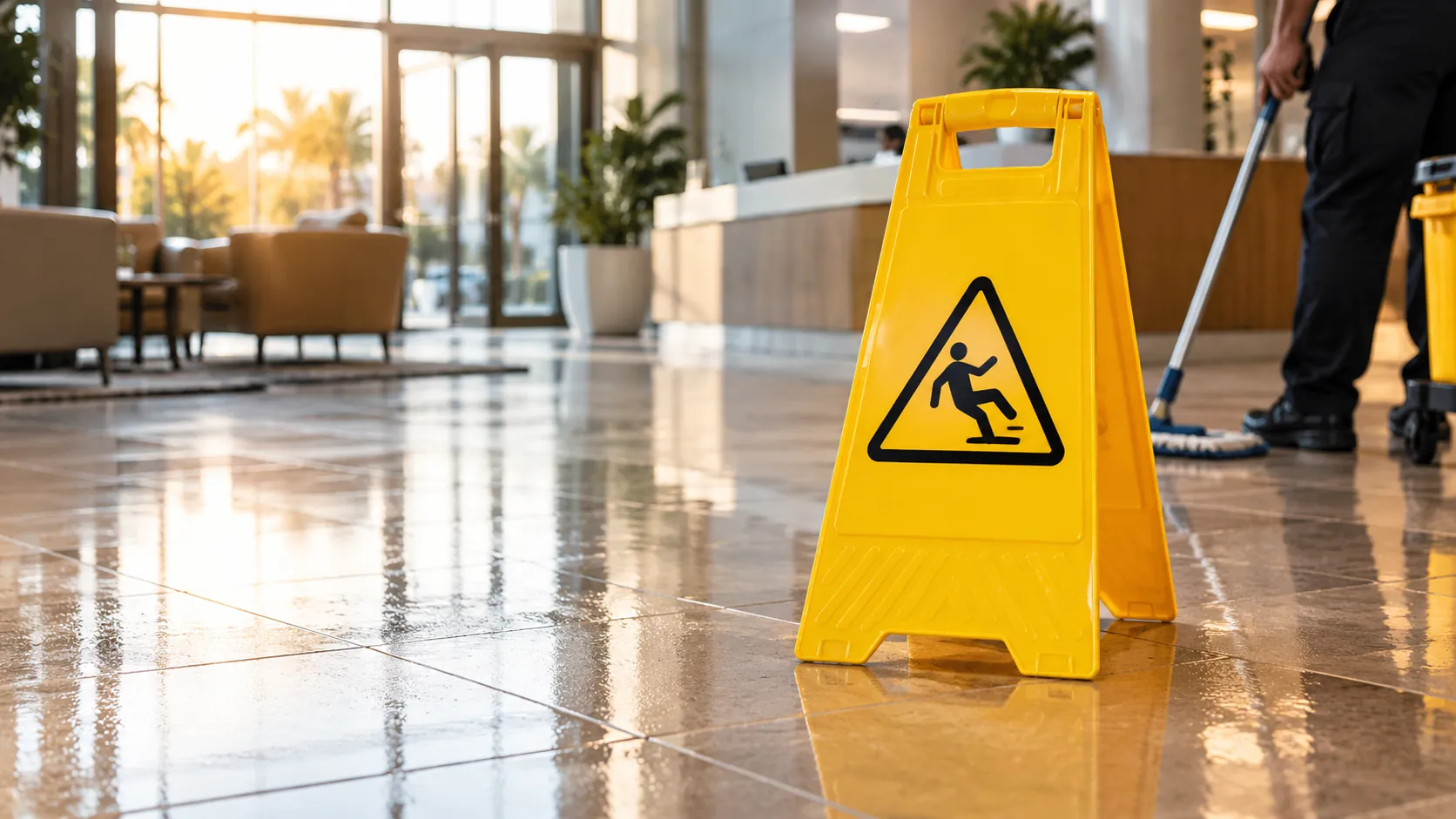
If a customer, vendor, or visitor is physically injured on your premises or because of your business operations, your general liability policy pays for their medical expenses, lost wages, and any legal costs if they sue. A client who slips on a wet floor in your office, a pedestrian injured by falling equipment at a job site, or a customer who has an allergic reaction to a product you sold are all examples.
Property damage
If your business operations damage someone else’s property, this coverage pays for repair or replacement costs. An electrician who accidentally starts a small fire in a client’s wall, a cleaning crew that damages an expensive piece of furniture, or a delivery that breaks a customer’s front door are all covered scenarios.
Personal injury
This covers non-physical harms like defamation (slander or libel), false arrest, wrongful eviction, and invasion of privacy. If a competitor claims your marketing materials contain false statements about their business, your general liability policy covers the defense.
Advertising injury
Claims arising from your advertising activities, including copyright infringement in your marketing materials, misappropriation of an advertising idea, or accusations of misleading advertising. This is part of the same coverage as personal injury on most CGL forms.
What It Does Not Cover
General liability is broad, but it has clear boundaries. Understanding what’s excluded helps you avoid gaps in your insurance program.
| Not Covered by General Liability | What You Need Instead |
|---|---|
| Injuries to your own employees | Workers’ compensation insurance |
| Auto accidents involving business vehicles | Commercial auto insurance |
| Damage to your own business property | Commercial property insurance |
| Professional mistakes, errors, or bad advice | Professional liability / errors and omissions (E&O) |
| Intentional acts or criminal conduct | Not insurable |
| Pollution or environmental damage | Environmental / pollution liability policy |
| Cyber breaches and data theft | Cyber liability insurance |
| Damage to your completed work (construction) | Builder’s risk or installation floater |
How Much General Liability Costs in California
General liability premiums vary widely based on your industry, revenue, location, and claims history. Here’s what California businesses typically pay.
The median cost for small businesses in California is approximately $35 per month (based on 2025 market data from Simply Business). But that number masks significant variation by industry.
| Industry | Median Monthly Cost |
|---|---|
| Remodeling / general contractor | $82 – $85 |
| Handyperson services | $51 |
| Janitorial / cleaning services | $41 |
| Electrical contracting | $36 |
| Landscaping services | $33 |
| Housekeeping | $29 |
| E-commerce / online retail | $27 |
| Beauty / cosmetology | $21 |
These are median figures for small operations. As your revenue, headcount, and job complexity increase, premiums scale accordingly. A general contractor doing $5 million in annual revenue will pay substantially more than a solo operator doing $200,000.
Factors that drive your premium
- Industry and risk class. Physical job-site work costs more than office-based services.
- Annual revenue. More revenue usually means more customer interactions and more exposure.
- Location. Dense urban areas and high-litigation regions carry higher rates.
- Claims history. Past claims signal higher risk and raise future premiums.
- Policy limits. Higher coverage limits increase the premium, but the jump from $1M to $2M per occurrence is often modest.
- Subcontractor use. Hiring uninsured subs can increase your exposure and your premium.
Coverage Limits and Deductibles
Most California small businesses carry a standard CGL policy with these limits:
| Limit Type | Standard Amount | What It Means |
|---|---|---|
| Per occurrence | $1,000,000 | Maximum the policy pays for any single claim or incident |
| General aggregate | $2,000,000 | Maximum the policy pays for all claims during the policy period |
| Products / completed operations aggregate | $2,000,000 | Separate aggregate for claims arising from your products or completed work |
| Personal / advertising injury | $1,000,000 | Per-person limit for defamation, copyright, and similar claims |
| Medical payments (per person) | $5,000 – $10,000 | Pays small injury claims without a lawsuit being filed |
| Damage to rented premises | $100,000 – $300,000 | Covers damage to a space you rent or occupy |
If your contracts require higher limits (common in construction, healthcare, and government work), you can increase the per-occurrence limit or add a commercial umbrella policy on top. An umbrella is often more cost-effective than raising the underlying GL limits for large contract requirements.

Who Needs General Liability in California
California does not legally require general liability insurance (unlike workers’ comp, which is mandatory). But in practice, almost every business needs it because other parties require it.
- Commercial landlords require proof of GL coverage before signing a lease.
- Client contracts almost always require a minimum of $1M/$2M in coverage.
- General contractors require subcontractors to carry GL and name them as additional insured.
- Licensing boards in some industries require proof of liability insurance.
- Lenders and investors may require GL as a condition of financing.
Even if no one requires it, operating without general liability means a single lawsuit could wipe out your business assets. The cost of a policy is almost always a fraction of the cost of a single uninsured claim.
General Liability vs. Other Business Policies
| Policy Type | What It Covers | How It Differs from GL |
|---|---|---|
| General liability (CGL) | Third-party bodily injury, property damage, personal/advertising injury | This is the baseline policy |
| Workers’ compensation | Employee injuries and occupational illness | GL covers third parties; workers’ comp covers your own employees |
| Commercial auto | Accidents involving business vehicles | GL excludes auto-related claims |
| Commercial property | Your own buildings, equipment, and inventory | GL covers damage you cause to others’ property, not yours |
| Professional liability (E&O) | Mistakes, negligence, or bad advice in professional services | GL covers physical harm; E&O covers financial harm from your professional work |
| BOP (Business Owner’s Policy) | Bundles GL + commercial property + business interruption | A package deal that combines GL with property coverage at a discount |
Additional Insured Endorsements
One of the most common requests California businesses receive is to add another party as an “additional insured” on their general liability policy. This is standard in construction, property management, and any industry where one company hires another to perform work.
When you add a client or general contractor as an additional insured, your GL policy extends coverage to them for claims arising out of your work. This protects them from being dragged into a lawsuit that stems from something you did on their project or property.
Most carriers handle this through a standard endorsement. Your broker can add additional insureds as needed and issue the certificate of insurance (COI) that proves coverage is in place.
How to Choose the Right Policy
Not all CGL policies are identical. Coverage forms, exclusions, and endorsement options vary by carrier. Here is what to evaluate.
Occurrence vs. claims-made
Most CGL policies are written on an occurrence basis, meaning they cover incidents that happen during the policy period regardless of when the claim is filed. Claims-made policies cover only claims filed during the policy period. Occurrence forms are generally better for most businesses because they provide long-tail protection.
Endorsements to consider
- Waiver of subrogation: Prevents your carrier from going after a client for costs related to a claim. Many contracts require this.
- Primary and non-contributory: Makes your policy respond first, before the additional insured’s own policy. Also frequently required in contracts.
- Blanket additional insured: Automatically extends AI status to anyone you’re contractually required to add, without issuing individual endorsements each time.
Work with a broker who knows your industry
A carrier that specializes in restaurant liability is different from one that specializes in construction GL. Your broker should know which carriers offer the best coverage forms, pricing, and claims service for your specific type of work.
Frequently Asked Questions
Is general liability insurance required by law in California?
No. California does not mandate general liability insurance for most businesses (unlike workers’ compensation, which is required). However, commercial landlords, clients, and general contractors almost always require it contractually. Operating without it exposes your business to significant financial risk from a single lawsuit.
What is the difference between general liability and a BOP?
A Business Owner’s Policy (BOP) bundles general liability with commercial property insurance and business interruption coverage into one package, usually at a lower combined cost than buying each policy separately. If you lease or own a commercial space and have business property to protect, a BOP is often the most cost-effective option.
Does general liability cover my employees if they get hurt?
No. Employee injuries are covered by workers’ compensation insurance, which is a separate and legally required policy in California. General liability covers injuries to third parties, such as customers, vendors, and visitors.
How much general liability coverage do I need?
Most California businesses start with $1 million per occurrence and $2 million aggregate. If your contracts require higher limits, or if your operations involve significant public exposure, consider a commercial umbrella that sits on top of the GL policy. Your broker can help you match your limits to your actual contract and risk requirements.
Can I get general liability without workers’ comp?
If you are a sole proprietor with no employees, yes. But the moment you hire an employee, California law requires workers’ comp regardless of what other policies you carry. Most brokers will quote both together so you can see the full cost of your insurance program.
What is an additional insured, and why does my client want to be one?
An additional insured is a party added to your general liability policy who receives coverage for claims arising from your work. Your client requests this so that if someone is injured or property is damaged because of work you performed for them, your GL policy responds first, protecting the client from direct liability. It is a standard practice in contracting, property management, and professional services.
DreamSafe Insurance compares general liability policies from multiple carriers to find the right coverage, limits, and price for your California business. Whether you need a standalone GL policy or a full business insurance package, we can help. Get a free quote and find out what the right coverage costs.